Category: Most amazing places

Over the next 500 years, colonizers discovered hundreds of stunning sites: the ruins of ancient settlements, vast waterfalls, and endless deserts.

  • Marble Caves in Chile

    Marble Caves in Chile

    Marble Caves in Chile

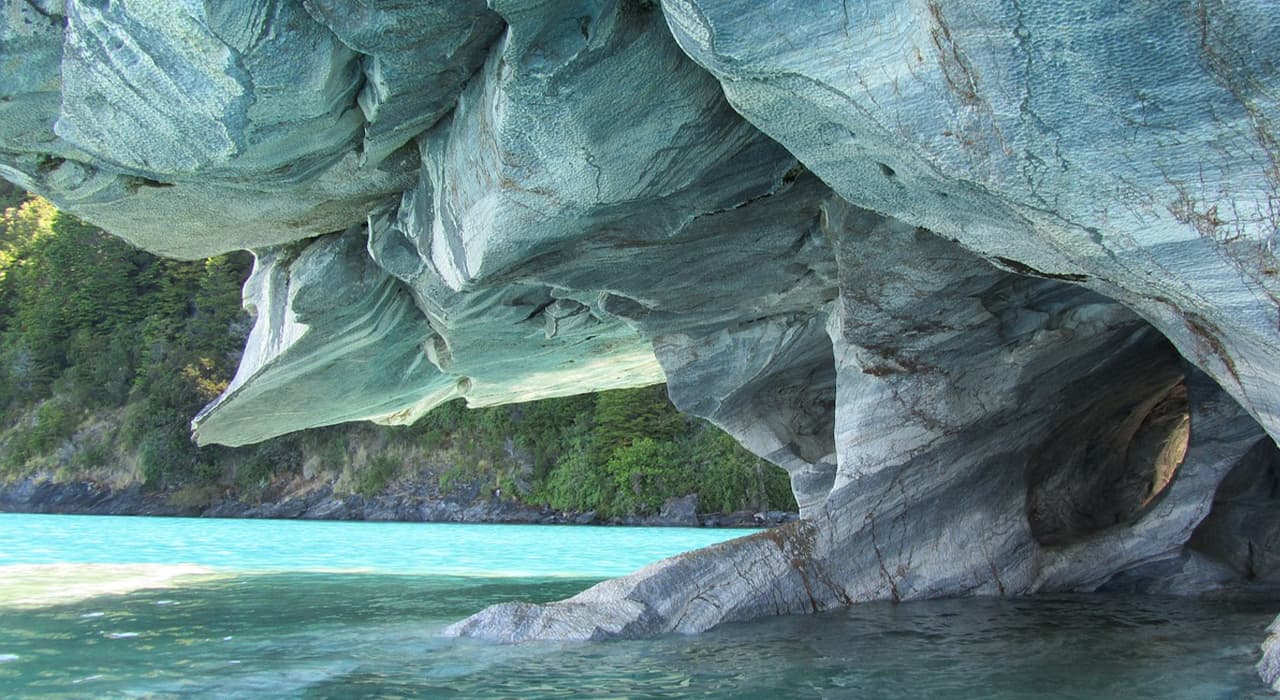
    One of the most beautiful places on our immense planet is located on the border of Chile and Argentina in the Patagonian Andes. The fabulous creation that nature herself created is located in South America in one of the deepest lakes in the world, Buenos Aires.

    Locals call it majestically Marble Cathedral, but many tourist brochures refer to it as Las Cavernas de Marmol or the Marble Caves of Chile. It is Patagonia’s most striking and memorable attraction, visited by tens of thousands of tourists from all corners of the globe each year.

    The pristine beauty of the blue-blue rocks, shimmering in the crystal clear waters of the lake, according to most travelers who have seen this miracle of nature, makes you believe that paradise on earth does exist. We would like to note that in some sources you can find information that Las Cavernas de Marmol is located in the waters of Lake General Carrera. This is not a mistake or a typo, it is all about the territorial location of the marble caves: General Carrera is the Chilean name, Buenos Aires, as it is easy to guess, the Argentine one.

    The Marble Caves of Chile: a beauty created by nature itself
    The intricate labyrinths of the Marble Caves will not leave any traveler indifferent. The majesty and unearthly beauty of the carved marble vaults, which on a sunny day are emphasized by bright rays of sunlight peeking through here and there, is a truly unforgettable spectacle. The reflections of light in the emerald-blue water, as if playing in the lake, create amazing optical illusions every second. That is why the Marble Caves look different both on a bright sunny day and in the cloudy weather.

    The variability of the water level, which is due to the seasonal melting of glaciers, also contributes to the “reincarnation” of the fantastic tunnels of the caves.

    Travelers who have already been to this amazing place advise all those who just decide to go to the marble caves in Chile to make their excursion even before the beginning of spring.

    During this period of time, the low water level in the caves allows curious tourists to take advantage of the pleasure boats provided by local guides and enjoy the splendor of nature inside the caves. A stroll under the vaults of the Marble Cathedral, which is not made by hand, allows you to see this natural wonder up close and peek through the so-called “dark windows” of the caves, which look more like an endless tunnel. However, who lives there, remains a mystery for tourists, because no boat can get deep into the caves…

    As mentioned above, the colors of the caves change depending on the season and the day, but also the various admixtures of minerals in the walls give Las Cavernas de Marmol an unearthly splendor. As glaciers melt, the lake water becomes cloudy and so the rocks and caves are “colored” in muted tones. Some travelers on cloudy days see the Marble Cathedral as similar to a dark and mysterious ghost. All shades of blue adorn the caves of Chile in the summer, when the mountain lake glistens in the bright sunlight.

    Tourists from all over the world are attracted not only by the opportunity to enjoy and touch the splendor of the picturesque caves created by nature itself, but also by the opportunity to spend their free time doing their favorite activity: fishing. Lake Lago Buenos Aires is world famous for its variety of fish, including salmon and trout, which can live only in the purest water.

    Travelers will need patience and time to get to this amazing place, as the Marble Caves are a considerable distance from the Chilean capital Santiago. Those who decide to visit Las Cavernas de Marmol must first travel the 1,300 kilometers from Santiago to Coillac, and then another 300 kilometers (!) to the Marble Caves. However, all the difficulties associated with the flight and travel and the accumulated fatigue are instantly forgotten and disappear as soon as the traveler is in the immediate vicinity of the majestic and magnificent Marble Caves, created by the invisible “breath” of nature.
  • Amazon River

    Amazon River

    Amazon River

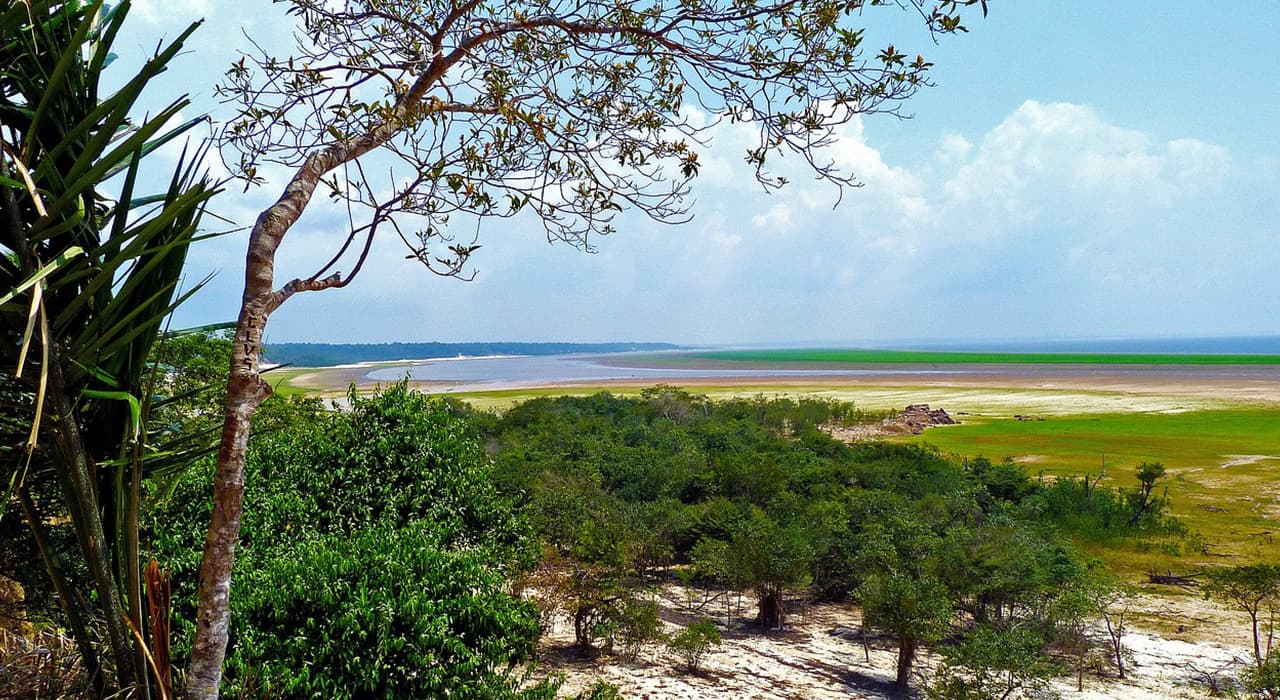
    Conquistador Francisco de Orellana discovered the Amazon as early as the 16th century, but the debate about the length of the river continues even today. The most widely accepted theory is that the origins of the Amazon begin in the high Andean mountains of Peru, namely the three rivers Mantaro, Apurimac and Maranone. That is, we can say that the length of the Amazon ranges from 6,400 to 7,100 km.

    By the way, the Amazon also owes its name to Francisco de Orellana. First, he called the river his own last name, but then was attacked by beautiful Aboriginal women, was very impressed by the belligerent Amazons and renamed the river Amazon. However, scholars are more inclined to think that the role of the “beautiful Amazons” was played by men with long hair.

    Travels on the Amazon
    The Amazon River basin is found in Brazil, Bolivia, Peru, Ecuador, Colombia, and Venezuela. In almost any of these countries you can begin your journey along the river.

    Almost the entire territory of the Amazon is impenetrable jungle, so river travel is not only fun – it is the best way to get from point A to point B.

    River cruises with pre-designed itineraries and excursions are quite popular among tourists, but you can also rent a boat yourself.

    Ships are conditionally divided into “fast” and “slow”. “Fast” carry only passengers, they are more expensive and more comfortable. “Slow” boats consist of several decks: the lower ones carry cargo, the upper ones carry passengers. But you have to be prepared to ride in a hammock!

    What to do in the Amazon?
    A trip to the Amazon is perfect for those who want to gain a unique experience and are not afraid to explore. Here’s a short list of things to try in the Amazon:

    Wildlife Watching. On an Amazon River cruise, it’s best to go with a naturalist guide who will help you get to know the wildlife and its inhabitants. For example, you can meet pink river dolphin or capuchin monkeys here. Don’t forget to bring binoculars!

    Kayaking in the lakes and tributaries of the Amazon. Here you can see three-toed sloths and birds that are found only in the Amazon rainforest.
    Piranha Fishing. Seeing a piranha snap its jaws on the end of your fishing line is something that can only be experienced in the Amazon jungle.
    Regional Cuisine. The countries of the Amazon are called the best culinary destinations in the world, and each has its own gastronomic characteristics. There are fish, meat, and vegetable dishes, as well as local cocktails made from exotic tropical fruits. Feeling adventurous? Try a worm or piranha!

    Animals of the Amazon.
    The fauna of the Amazon rainforest is worth talking about separately. The Amazon River itself and all its countless tributaries form its own ecosystem, which is home to over 2,000 species of fish and over 400 amphibians. It is believed that more than half of the species inhabiting this region are still unknown to science.

  • The Atacama is the driest desert in the world

    The Atacama is the driest desert in the world

    The Atacama is the driest desert in the world

    Scientists discovered the oldest human mummies in the Atacama Desert: they are four millennia older than their Egyptian counterparts. The extreme drought and lack of bacteria contributed to the excellent preservation of these specimens. In terms of numbers, the oldest mummy in Egypt dates back to 3,000 B.C., while the Atacama mummy is more than 9,000 years old.

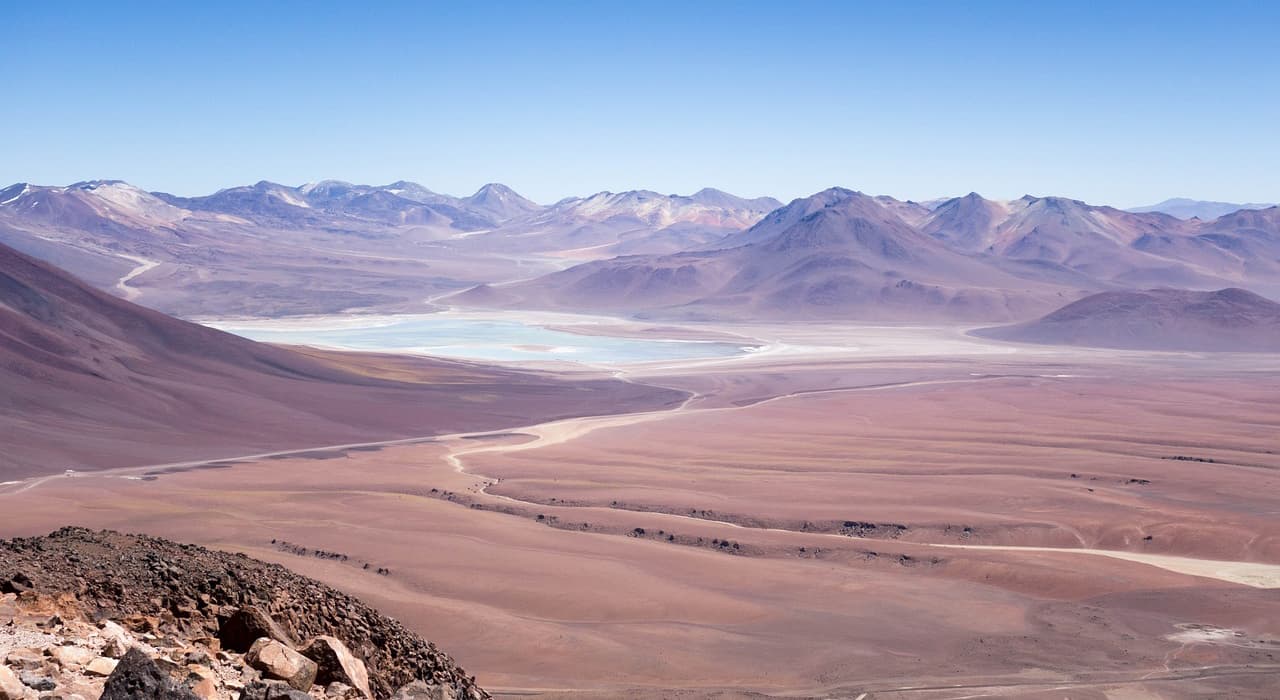
    According to NASA research, the Atacama, located in Chile, is the driest and coldest desert in the world. Some climate stations in this region have never recorded the appearance of rain. In the central sector of the desert, periods without rain are often up to four years. There was no heavy rainfall in the Atacama from 1570 to 1971.

    Instead of soil, the Atacama is a dried and heat-cracked crust that is a dead zone for any vegetation. It is completely devoid of moisture and nutrients. Soil samples in the desert are very similar to soil samples taken from the surface of Mars. Therefore, it is often here to test space equipment sent to the red planet.

    The driest part of the Atacama is Lunar Valley, so named because of the topography, which resembles images taken on the surface of the moon. Mars rovers were tested here and an episode of Star Wars was filmed.

    In Atacama there are also picturesque regions. This area is closer to the Alps, the Antiplano Highlands. It rains often in January and February, so quite a few plants and animals grow here. There is also a geyser field El Tatio, the third largest in the world.

    The Atacama is about 1,000 km long, but the borders of the desert are not clearly delineated. The main part of the desert is located between the southern bend of the Loa River and the mountains separating the Salado and Copiapo river basins. To the north, the desert rests on the Peruvian border.

    If you look at the map, the desert is between the Pacific Ocean and the Andes of South America. It consists mainly of dried-up salt basins that are located at the foot of the coastal mountains in the west and bedrock deposits at the base of the Andes in the east. In places the bedrock is covered with sand dunes, but much more often with pebbles and gravel.

    The height of the coastal mountain chain in some places reaches 1.5 km, some peaks – 2 km. The mountains end abruptly near the sea with coastal cliffs and boulders. The height of some of them is 0,5 km. Thus, these coastal mountains make it very difficult to connect the ports between the outside and the inside of the country.

    The main part of the desert is the Tamarugal plain, located at an altitude of 900 m above sea level. Farther east, near the western edges of the Andes, are many volcanic hills, sometimes as high as 5,000 m. Along the northeastern border of Chile with Argentina and Bolivia stretches the Atacama Plateau, which reaches a height of four kilometers.